Renting a Car for an Island or Coastal Trip: What Actually Changes
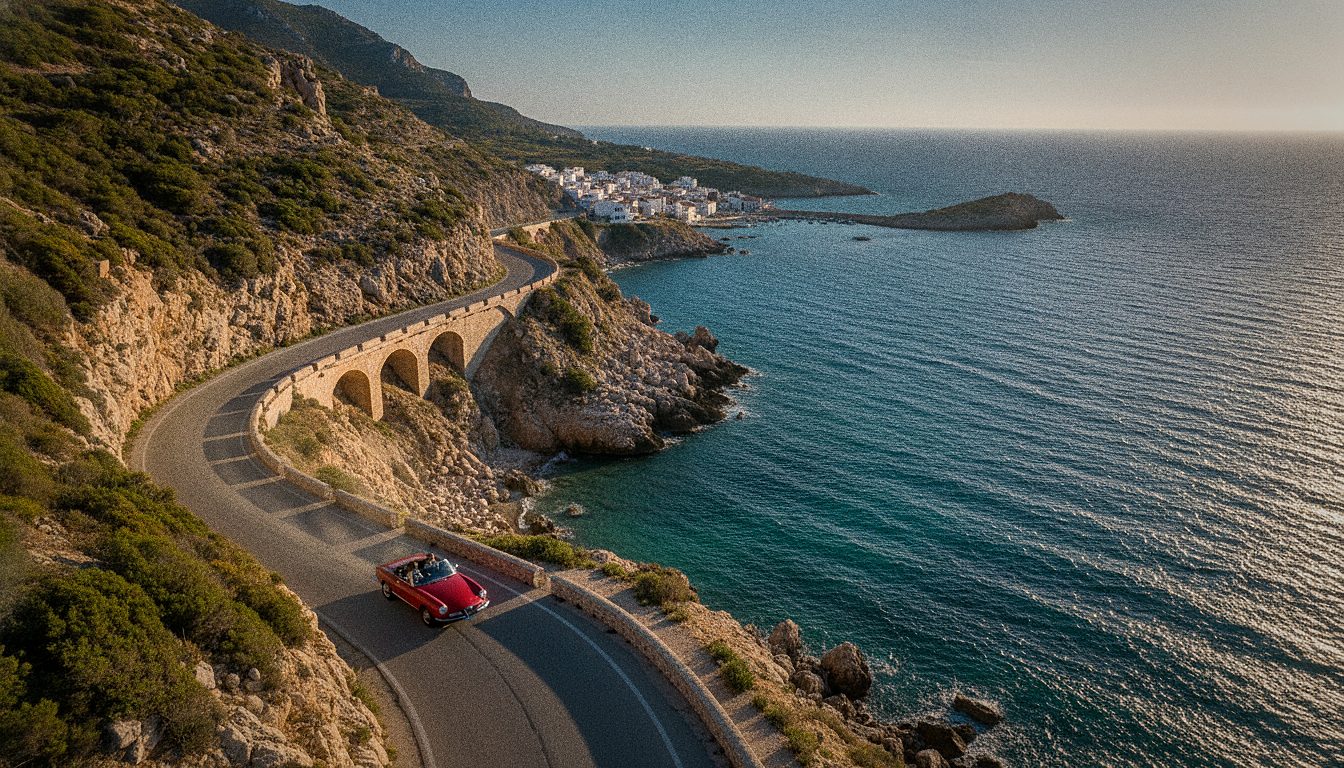
Renting a car in a major mainland city is a fairly forgiving exercise — wide fleets, plenty of competing counters, and roads built for exactly the kind of traffic a rental car adds to them. Island and coastal rentals don't follow the same rules, and the gap between the two catches enough first-time visitors that it's worth spelling out specifically what changes.
Smaller fleets mean earlier booking
An island or regional coastal airport simply doesn't run the same combined fleet size as a major mainland hub, even when the airport itself feels reasonably busy. That's rarely a problem outside peak season, but through the busiest months it means popular car classes can sell out weeks ahead rather than days — and a counter's fallback, when your preferred class is gone, is usually "here's what we actually have," which is not the conversation you want to be having after a long flight.
Two of our own destination guides run into this directly: car hire at Olbia Airport in Sardinia and renting a car at a Thailand airport both cover regions where booking a month or more ahead, rather than the week-before habit that works fine in a mainland city, is the difference between getting the car you actually wanted and getting whatever's left.
The roads themselves are a different kind of driving
Coastal and island roads are narrower, hillier, and less forgiving of a car that felt fine to book online but feels considerably bigger once you're on a switchback above the water. This isn't universal — some coastal regions have wide, modern roads — but it's common enough that it's worth checking before assuming a mid-size or larger car is the safe default choice.
- A smaller, lower car is usually easier to place on narrow coastal roads and easier to park in towns where kerb space is limited
- Automatic transmission is worth specifying explicitly if it matters to you — manual is still the more commonly available default in a lot of coastal and island regions
- Local driving habits and road etiquette can differ meaningfully from a mainland city, and are worth a few minutes of research before you're behind the wheel
- Fuel stations on smaller island and coastal roads tend to be spaced further apart and close earlier than in a city, so filling up before heading into a quieter stretch avoids an unplanned detour
Worth knowing: if the trip involves more than one island or a mainland-to-island ferry crossing, confirm whether the rental agreement actually allows it — a lot of standard island rental terms don't, and it's a cheaper question to ask before booking than to discover at a ferry terminal.
Deposits and insurance need reading early, not at the counter
The headline rental price at an island or coastal counter is rarely the whole picture. A security deposit hold, an excess or insurance upsell at the desk, and sometimes a young-driver surcharge can all appear after the fact — none of it unusual, but easier to plan around when read in advance rather than negotiated with a queue building up behind you.
What tends to differ from a standard city rental
| What to check | Why it matters more on an island or coastal trip |
|---|---|
| Deposit hold method | Some smaller counters only accept a credit card hold, not a debit card |
| Cross-border or inter-island travel | Not assumed by default on most island rental agreements, and worth confirming explicitly |
| Roadside assistance coverage area | Worth confirming it actually covers the more remote parts of the region, not just the roads near the airport |
| One-way / different drop-off airport | Usually possible on larger islands but carries its own fee, worth pricing separately rather than assuming parity with a round-trip rental |
Matching the car to the trip, not the destination's reputation
A region's reputation — glamorous coastline, laid-back island pace — doesn't actually tell you what car to book. A trip built around several small coastal towns and a lot of parking in tight spaces calls for a different car than a trip built around one or two longer drives between bigger towns. Working out the actual shape of the trip first, rather than picking a car class because it matches the destination's image, tends to produce a much more comfortable week behind the wheel.
Peak season versus the rest of the year
Island and coastal rentals swing harder between peak and off-peak than a mainland city rental usually does, because the whole region's tourism capacity — not just the rental fleet — is built around a shorter season. In the busiest weeks, that shows up as tighter availability, higher prices, and a stronger case for booking early. Outside that window, the same region can be a genuinely easy place to rent a car: shorter counter queues, more flexibility to change a booking last-minute, and noticeably better rates.
The trade-off is that shoulder-season and off-season trips sometimes mean shorter opening hours at smaller local attractions, quieter towns that some travellers prefer and others find flat, and occasionally reduced ferry or transfer schedules if the trip involves getting to a smaller island within the region. None of that makes off-peak travel worse, but it changes what the trip actually feels like, and it's worth deciding which trade-off you'd rather make before booking flights around a specific week.
Solo, couple, family, or group
Who's travelling changes the calculus almost as much as the season does. A solo traveller or a couple can usually get away with the smallest practical car class and the most flexible booking window, since there's less luggage and less need to coordinate around anyone else's schedule. A family trip usually needs to weigh boot space for luggage and any car-seat requirements against the narrow-road, easier-to-park logic that favours a smaller car elsewhere in this guide — worth checking the rental company's car-seat policy specifically, since it isn't always included by default even when advertised as available. A group large enough to need two cars should also weigh whether a single larger vehicle might actually be easier to manage on narrow coastal roads than two smaller ones travelling together.
If the rental car is one piece of a bigger trip built around a festival, a landmark, or both, our notes on combining a food festival with a longer city break and on building a trip around a single landmark cover how the rest of that planning tends to fit together.